
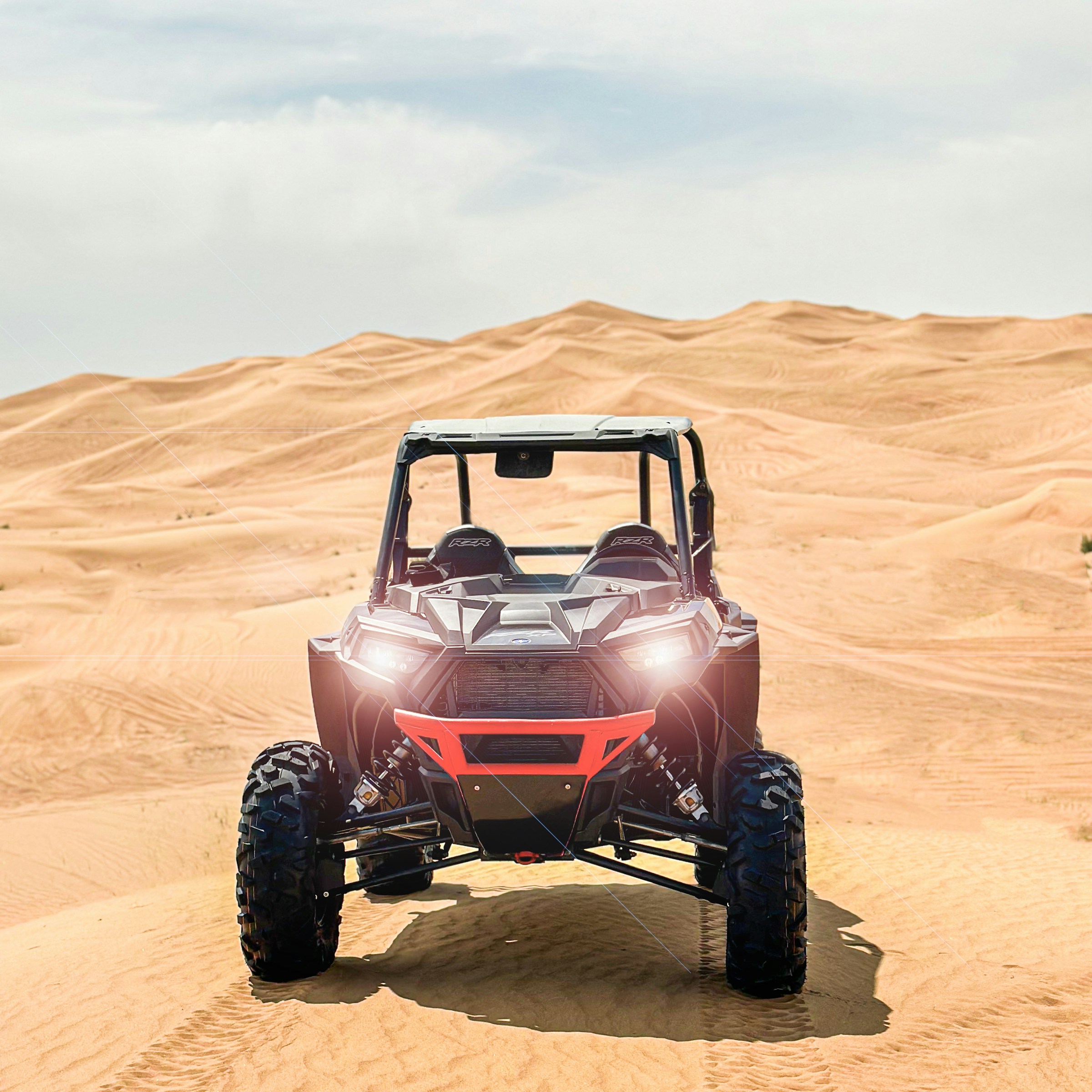

Dubai Dune Buggy: Polaris vs Can-Am Guide (2026)
A Dubai dune buggy tour is the desert experience for travellers who would rather hold the steering wheel than sit behind a safari driver. You follow a guide into open sand, feel the buggy work beneath you, and learn quickly that a dune is not simply a hill with better lighting. The appeal is direct: engine noise, shifting terrain, and enough concentration to make the city feel very far away.
Most booking pages lead with engine size and dramatic photographs. The more useful questions are whether you will drive a Polaris or Can-Am, how long you spend on the dunes, what protective equipment is included, and whether the route suits a first-time driver. Here is how to compare the experience without being distracted by the biggest number in the listing.
What a Dubai dune buggy tour actually involves
The day usually begins with pickup from Dubai or a meeting point near the operator’s desert base. At camp, staff fit helmets and goggles, explain the controls, and cover convoy rules. After a short practice, you follow a lead guide into the dunes. The guide chooses the line and pace; you control your own buggy.
That distinction matters. “Self-drive” does not mean taking a vehicle into the desert alone. A responsible tour keeps the group within sight, spaces the buggies to reduce collisions, and stops before steeper sections to explain the approach. If somebody gets stuck—and first-timers often do—the support team handles the recovery.
The advertised duration may refer to driving time or to the whole activity. Confirm whether “two hours” means two hours behind the wheel or includes transfers, briefing, refreshments, and photo stops. Hotel pickup can turn a 90-minute drive into a four- or five-hour outing, depending on the base and traffic.
Polaris vs Can-Am for a dune buggy Dubai experience
Polaris RZR and Can-Am Maverick models dominate the premium end of Dubai’s buggy market. Both are purpose-built side-by-side vehicles with long-travel suspension, roll cages, harnesses, and enough power for guided dune routes. Neither brand automatically guarantees the better tour.
Polaris RZR: Polaris offers a broad RZR range, from agile two-seat machines to larger four-seat models. The controls tend to feel approachable, and the platform is common enough that many operators know it well. Travellers can review current designs and safety information on the official Polaris RZR website.
Can-Am Maverick: Can-Am’s Maverick line is often marketed around high-output engines and sophisticated suspension. Higher-spec versions can feel planted across rough sand, although a first-time tourist in a guided convoy is unlikely to use anything close to the vehicle’s full performance. Current model specifications are available from the official Can-Am website.
For most visitors, the smartest comparison is not Polaris versus Can-Am in isolation. Ask for the exact model, model year, seating layout, maintenance routine, and maximum group size. A well-maintained mid-range buggy with a patient guide is a better experience than a flagship machine with worn harnesses, tired tyres, or ten vehicles in the convoy.
Choose the right self drive desert duration
About 60 minutes: best for first-timers, tight schedules, and travellers unsure how they will handle heat or motion. You get meaningful dune time, but the route may stay relatively close to camp.
About 90 minutes: the sweet spot for many visitors. There is time to settle into the controls, cross varied terrain, and stop for photographs without the drive feeling repetitive.
Two hours or more: better for confident drivers who want deeper desert scenery and a more physical outing. Concentration, vibration, and heat build over time, so longer is not automatically better.
Sunrise and early-morning departures usually offer cooler conditions and firmer-feeling sand. Late-afternoon sessions bring warmer colours and the possibility of sunset, but can feel hotter for much of the year. In peak summer, prioritise the earliest available slot and take the operator’s heat guidance seriously.
Dubai dune buggy safety basics before you drive
A buggy’s roll cage can create a false sense of invincibility. Desert driving still involves rollovers, sudden drops, other vehicles, and heat exposure. Wear the helmet and eye protection for the entire drive. Tighten the harness correctly, keep hands and arms inside the cage, and never unclip until the guide says the vehicle is secure.
Follow the lead buggy’s line rather than improvising a more dramatic one. Maintain the instructed gap, avoid stopping on the blind side of a crest, and do not accelerate merely to keep up with a faster driver. Good guides adjust the convoy pace; poor decisions at the top of a dune become difficult to correct.
Before booking, check the operator’s minimum driver age, passenger age, licence requirement, cancellation terms, and policy for vehicle damage. Rules vary between providers and packages. Travellers should also read the UAE Government’s general road safety guidance and follow all local instructions given on site.
Do not drive after drinking alcohol or while taking medication that affects alertness. Tell the operator about pregnancy, back or neck problems, recent surgery, heart conditions, or severe motion sensitivity before paying. A dune buggy ride is jolting even when the guide keeps the pace sensible.
What to wear for a dune buggy Dubai experience
Wear lightweight clothes that cover your shoulders, secure closed-toe shoes, and nothing loose enough to catch around the cabin. Sand reaches places sand has no business reaching, so choose clothes you do not mind getting dusty. Sunglasses help at camp, while the supplied goggles should protect your eyes during the drive.
Bring water, sunscreen, and a secure phone case or zipped pocket. Leave expensive watches and loose jewellery at the hotel. A scarf or neck gaiter is useful when dust hangs in the air, but it should fit securely beneath the helmet rather than trail freely.
Carry only what you need. Unsecured bags bounce around, and holding a phone while driving compromises control. Use designated photo stops; the desert will remain photogenic for the extra ten seconds it takes to park safely.
How to compare Dubai dune buggy operators
Start with what is included: transfer, actual drive time, fuel, helmet, goggles, guide, refreshments, insurance, and recovery support. Then ask how many buggies travel together and whether slower drivers can join a separate convoy. Small groups generally mean less waiting and more responsive instruction.
Inspect recent customer photographs for vehicle condition rather than relying only on polished marketing images. On arrival, check that the harness latches securely, the helmet fits, the tyres appear sound, and warning lights are not being ignored. If the equipment or briefing feels careless, do not let sunk-cost logic put you behind the wheel.
A buggy tour can be sold alone or bundled with sandboarding, camel rides, dinner, and entertainment. Pick the standalone drive if the vehicle is the point. Choose a broader package if your group wants a classic evening in the desert as well. For that comparison, read Dubai Desert Safari: The Honest Adventure Guide (Budget vs. Premium). If you want another activity where you control the machine, compare it with Dubai Jet Ski: 1-Hour vs. 2-Hour Tour (What You Actually See).
Is a Dubai dune buggy worth it?
Yes, if you want an active desert experience and are comfortable taking instructions. Unlike ordinary dune bashing, the memory is not just the landscape—it is learning how the buggy responds when soft sand steals speed, feeling the suspension absorb a rough section, and gaining confidence one dune at a time.
Skip it if you dislike jolting motion, expect a peaceful desert escape, or mainly want dinner and cultural activities. A guided safari will suit those priorities better. But for travellers choosing between watching the dunes and driving through them, the buggy is the clear answer. Book for the guide, route, and condition of the machine; Polaris versus Can-Am comes after that.
Dubai dune buggy FAQ
Is a Dubai dune buggy experience self-drive?
Most tourist buggy experiences are self-drive and guide-led. You operate the vehicle while following a professional guide in a convoy. Confirm the format before booking because passenger rides and guided-driver packages also exist.
Do I need a driving licence for a Dubai dune buggy tour?
Requirements vary by operator, vehicle, and route. Some guided off-road experiences do not require a road driving licence, while others set their own licence and minimum-age rules. Ask the operator for the written requirement before paying.
Which is better for a Dubai dune buggy: Polaris or Can-Am?
Both make highly capable side-by-sides. For a tourist drive, maintenance, suspension condition, seating layout, guide quality, and route are more important than the badge. Compare the exact models rather than brands alone.
How long should a Dubai dune buggy tour be for beginners?
Sixty minutes is enough for a first experience, while 90 minutes gives most beginners time to become comfortable and enjoy a more varied route. Two-hour drives suit confident travellers prepared for extra heat, vibration, and concentration.
Is a Dubai dune buggy safe for first-time drivers?
A professionally guided tour with maintained vehicles, proper helmets, goggles, harnesses, a clear briefing, and recovery support can suit first-timers. Drivers must follow convoy instructions and disclose relevant medical concerns.